Firm bids to avoid loss of Stanley Mills Hydro plant
30 April 2026
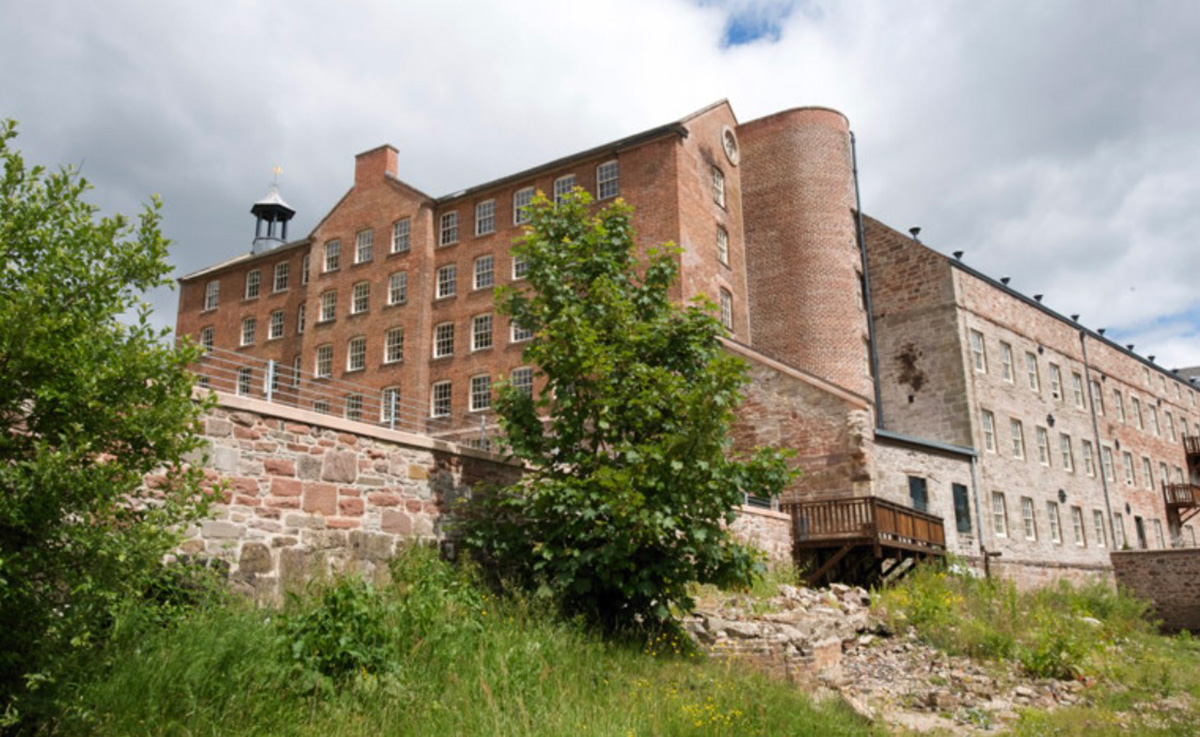
Operation on historic Perthshire site vulnerable
Owners of the hydro plant at the historic Stanley Mills have applied for consent for urgent repair work to prevent the power station becoming ‘unviable’.
Renfin Stanley Mills Ltd, which bought the operation from RWE in 2012, has sought emergency planning to conduct repairs to a weir they say could put the future of the operation in doubt.
Water from the Tay is diverted to the power station to generate renewable electricity, via the weir, which has been in place since the 19th Century.
However, damage -made worse by cumulative flood events – means the operation has been running at 56% of its consented capacity for some time.
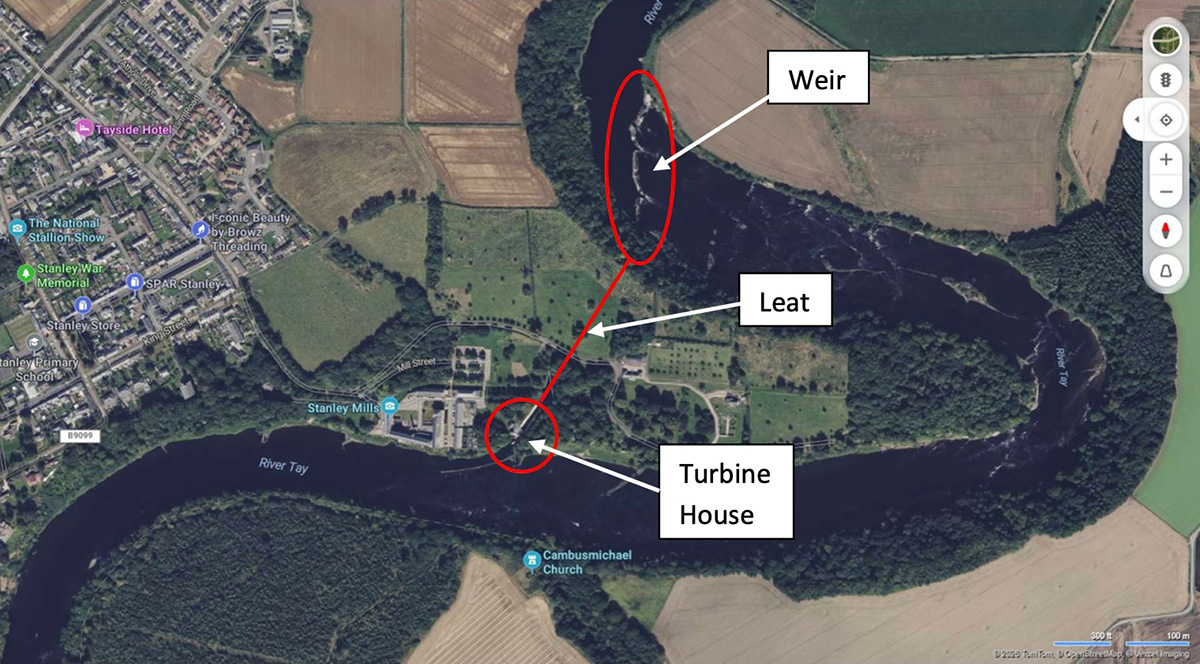 Image from plans showing the weir and intake
‘In jeopardy’
If the breaches in the weir are not plugged, by means of hydraulic excavators, the structure is at risk of collapse, placing electricity generation at the site in jeopardy.
The applicants say approval of the plan is essential to, ‘maintain the weir structure and prevent its total loss as well as to increase the availability of water to be diverted to the Stanley Mills Hydroelectric power plant located within the historic Stanley Mills development.
“The economic viability of the Hydroelectric power plant has been put into question in recent years due to reduced water availability caused by the deterioration of the weir.”
The site provides equivalent renewable power to over 700 homes in Stanley village and the loss of it, the company claims, would take a new Solar PV farm of 16+ hectares to replicate its capacity.
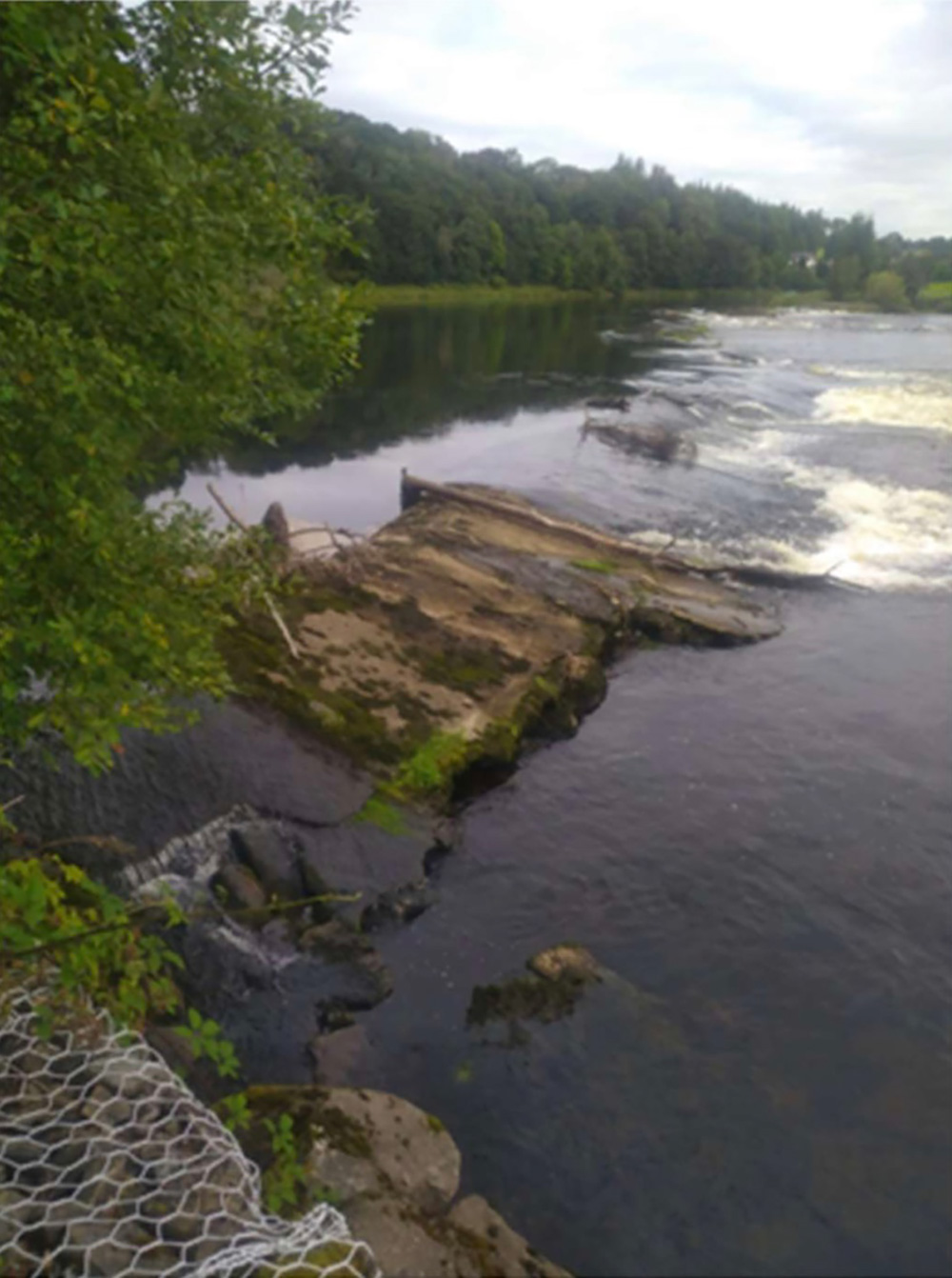 The damaged weir
Protected species
Planners will have to carefully consider the views of other river users on the Tay such as wild fisheries interests and water sports enthusiasts, with protected marine species potentially having to be relocated for the works, which are expected to take up to 6 weeks.
The weir lies within a protected SAC designation, and plans have been shared with the local fishery board and Paddle Scotland, as well as regulator, SEPA.
At optimum, the plant is capable of generating power for 1400 homes but, due to the reduced capacity, is currently creating renewable power for just over half of that.
Due to damage, the weir can’t hold flows back enough to divert water into the 80ft intake tunnel.
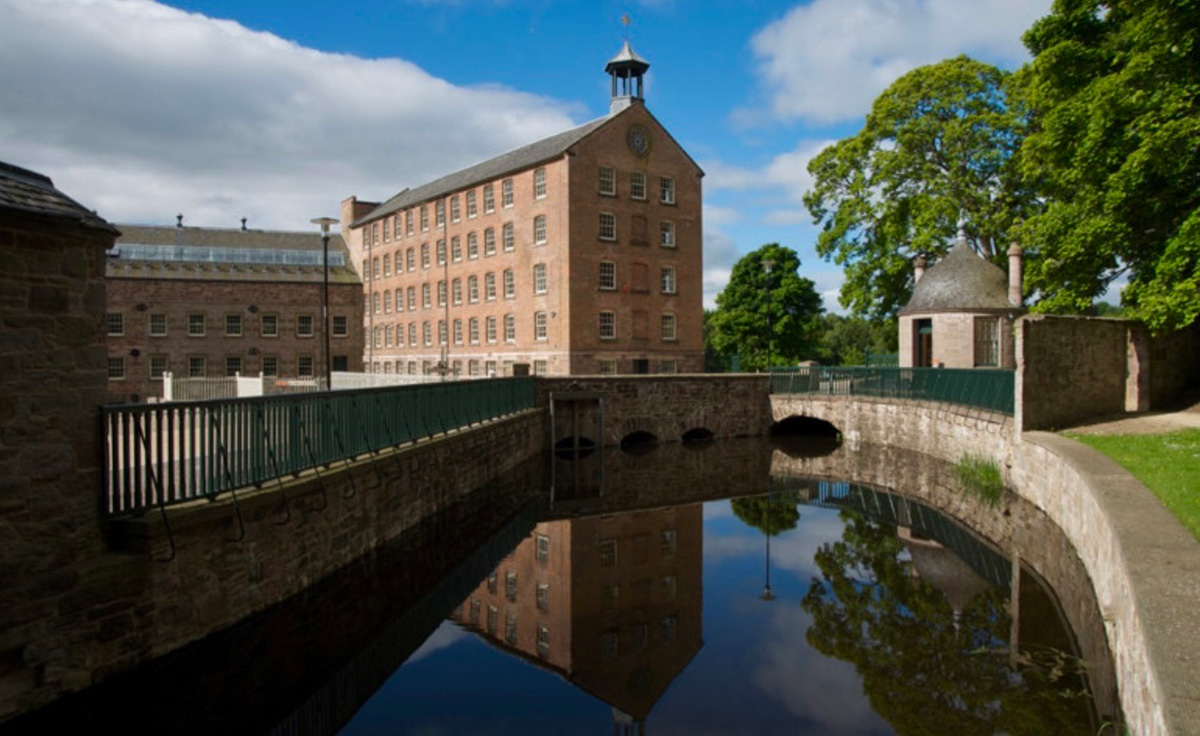
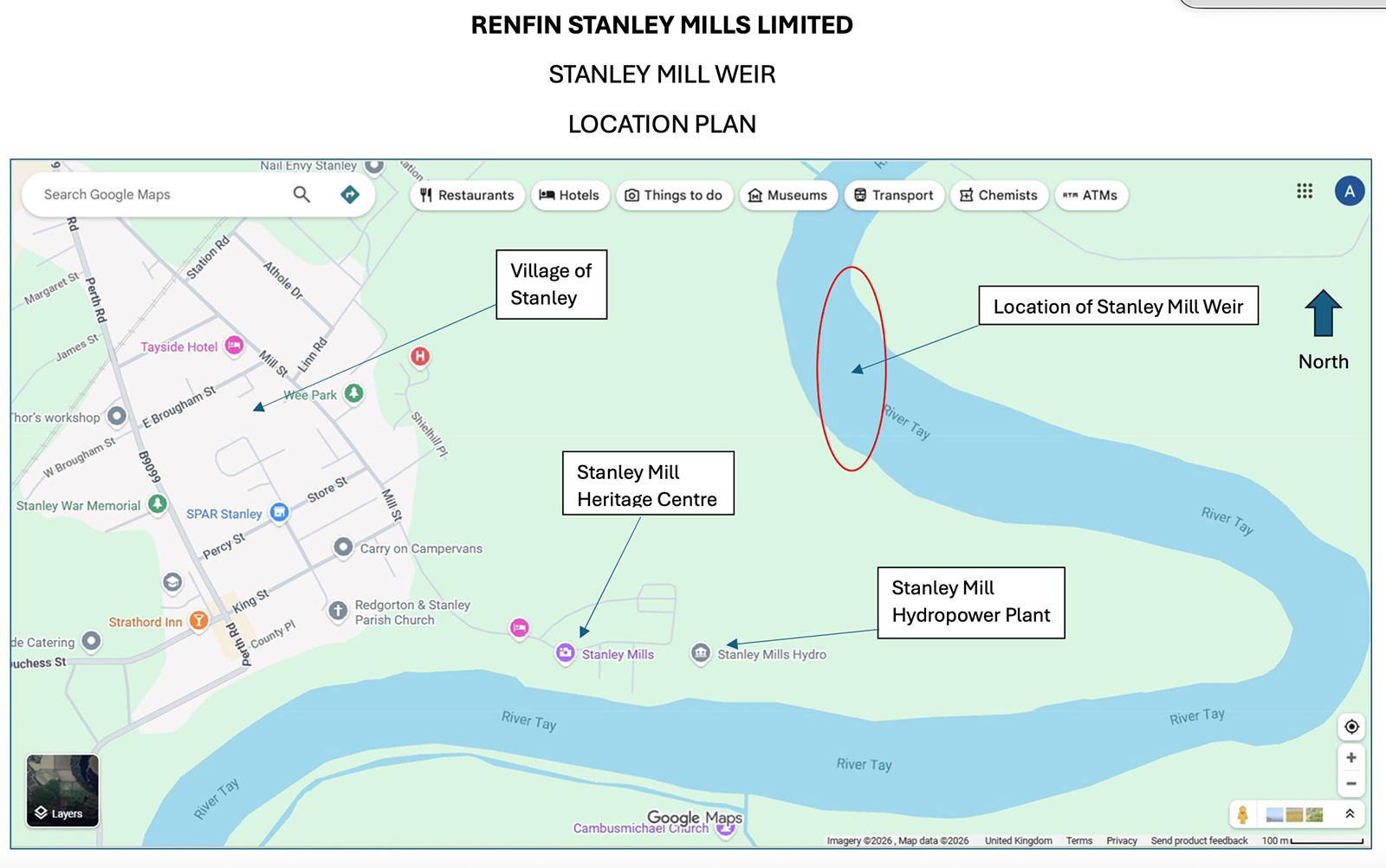 Company image showing site
Saved for the nation
The applicants have made the case for a rapid decision due to ‘ongoing incremental decline,’ adding that failure to remedy the breaches will ‘ultimately lead to complete loss of the weir and the generation of renewable power at Stanley Mills.’
Stanley Mills, an ex-cotton mill and now a major Perthshire visitor attraction, was purchased for the nation as a heritage asset after the Mill closed in 1989.
SEPA will decide in May whether it can provide the CAR (Controlled Activities Regulations) licence required for increased capacity at the plant.
Latest News